What to Wear in Hawaii
The Real Guide, Island by Island
By occasion, by fabric, by elevation — from beach to summit
Most visitors to Hawaii pack for the wrong place. They imagine a single version of the islands — hot, beachy, casual — and get blindsided the morning they drive up to Haleakala in shorts and a tank top, standing in 38-degree wind at the summit with the rest of the unprepared crowd.
Hawaii is genuinely casual, genuinely warm at sea level, and genuinely cold at elevation. It’s also a place where the difference between real Hawaiian clothing and a costume-shop version is obvious to anyone who lives here. We’ve been selling authentic Hawaiian clothing out of Maui since 1998 — what follows isn’t a generic packing checklist assembled from other packing checklists. It’s what we’d tell a good customer in the store the week before their trip.
What to Wear in Hawaii (The Short Answer)
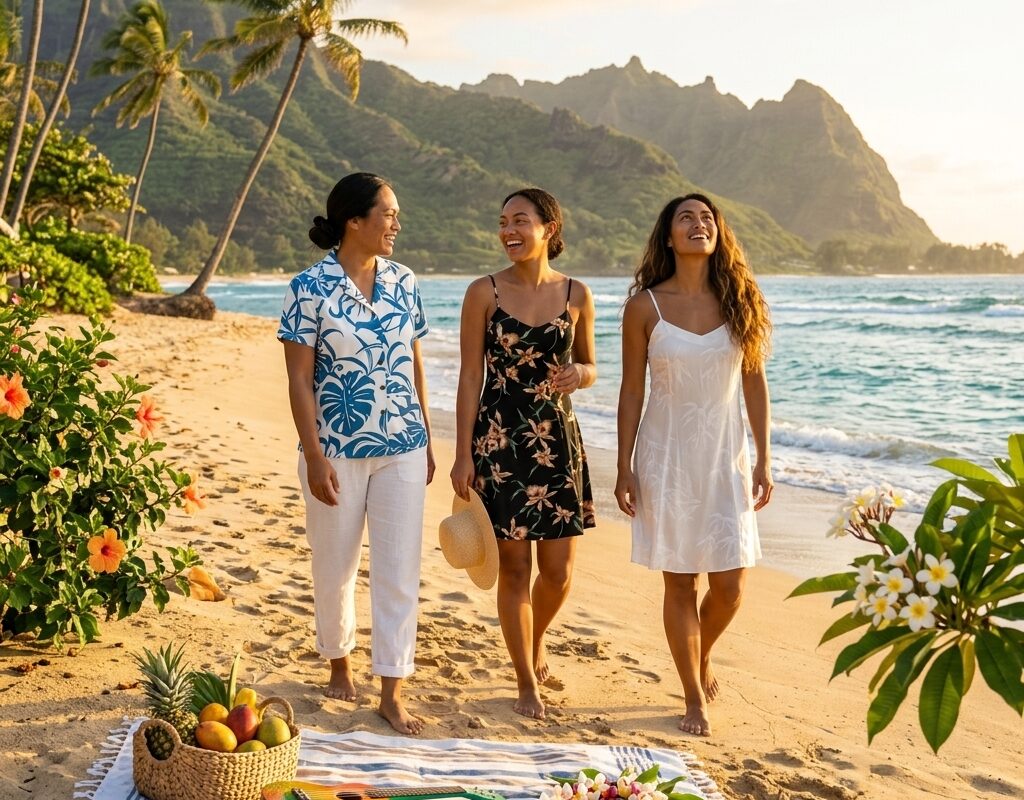
For most of your trip, wear lightweight breathable clothing — cotton or rayon aloha shirts and shorts for men; floral dresses, sundresses, or linen separates for women; comfortable sandals for everyone. Bring one warm layer for morning boat trips, helicopter rides, or mountain drives. Skip heavy denim, polyester, and anything you’d wear to a formal mainland event. One nice aloha shirt or sundress covers every dinner reservation on the islands.
The Fabric Question Nobody Talks About
Here’s the thing most “what to wear in Hawaii” guides skip: the fabric matters more than almost any other choice you’ll make.
Hawaii runs at 70–80% humidity year-round on the windward sides of each island. Polyester — the fabric in most cheap tourist shirts and department-store “Hawaiian” prints — traps heat against your skin. You’ll feel it immediately: damp, clammy, uncomfortable. Heavy cotton does the same if the weave is too tight. Thick denim gets heavy and takes hours to dry after even a brief rain shower.
Real Hawaiian aloha shirts are made in one of two fabrics: cotton (usually a medium-weight poplin or broadcloth) or rayon (a semi-synthetic derived from plant cellulose that drapes beautifully and breathes even better than most cottons). Both feel completely different in Hawaii’s heat than polyester does. They wick moisture away from the body rather than holding it in. They dry fast. They hold their prints through decades of washing.
Checking the fabric tag takes 5 seconds and tells you everything about what the next two weeks are going to feel like.
→ Browse all AlohaClothes collections — every piece in our store is either cotton or rayon, made in Hawaii.
“The fabric matters more than
almost any other choice you’ll make.
Cotton or rayon. Nothing else.“
— From our store in Wailuku, Maui
What Women Wear in Hawaii
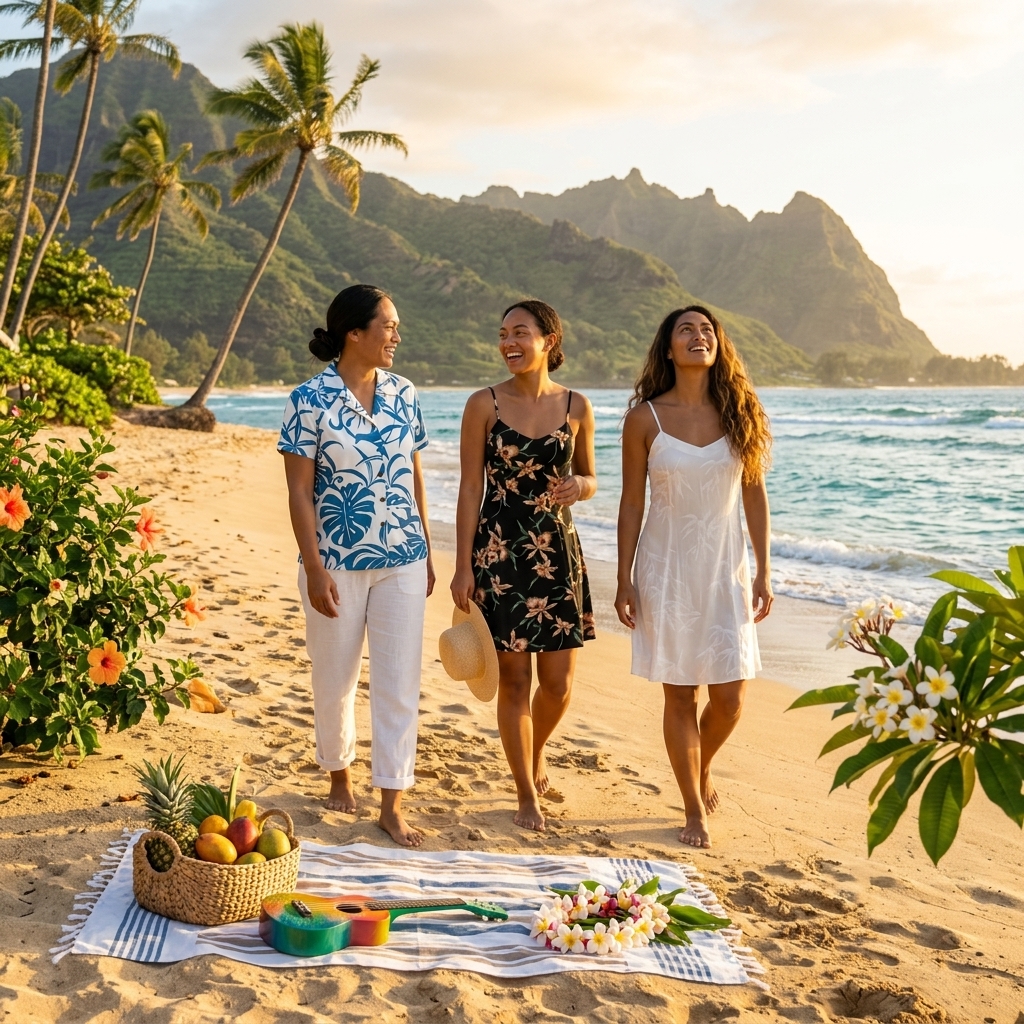
The honest answer: you have more good options here than almost anywhere you’ll travel. Hawaiian clothing was designed by and for women who spend their days moving between the beach, open-air restaurants, and warm outdoor evenings. The whole category works for exactly this situation.
Dresses
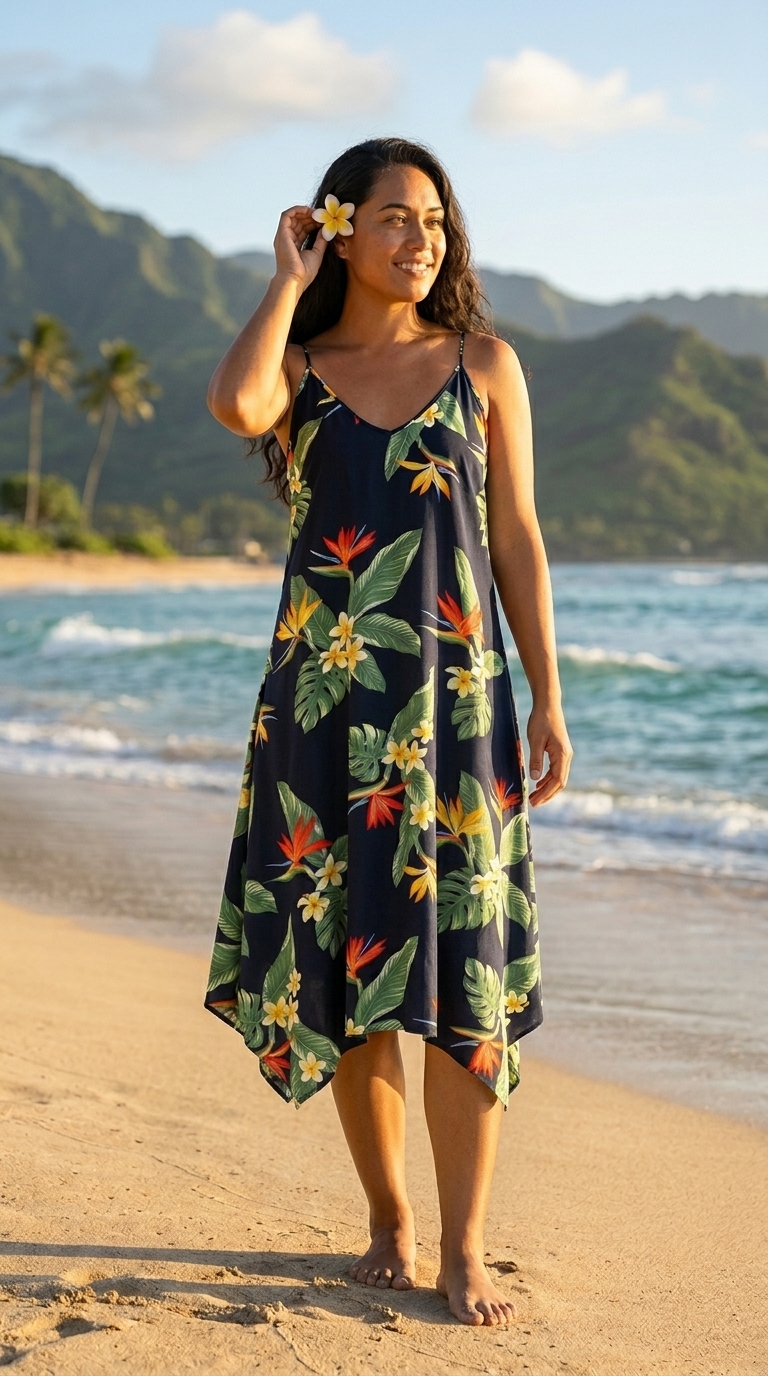
A floral sundress does more work in Hawaii than any other single garment you’ll pack. Wear it to the beach with a swimsuit underneath, rinse off, let it dry in twenty minutes in the trade wind, and it’s ready for dinner. A knee-length A-line or wrap dress in a hibiscus or plumeria print covers beach, lunch, shopping, and any restaurant on any island.
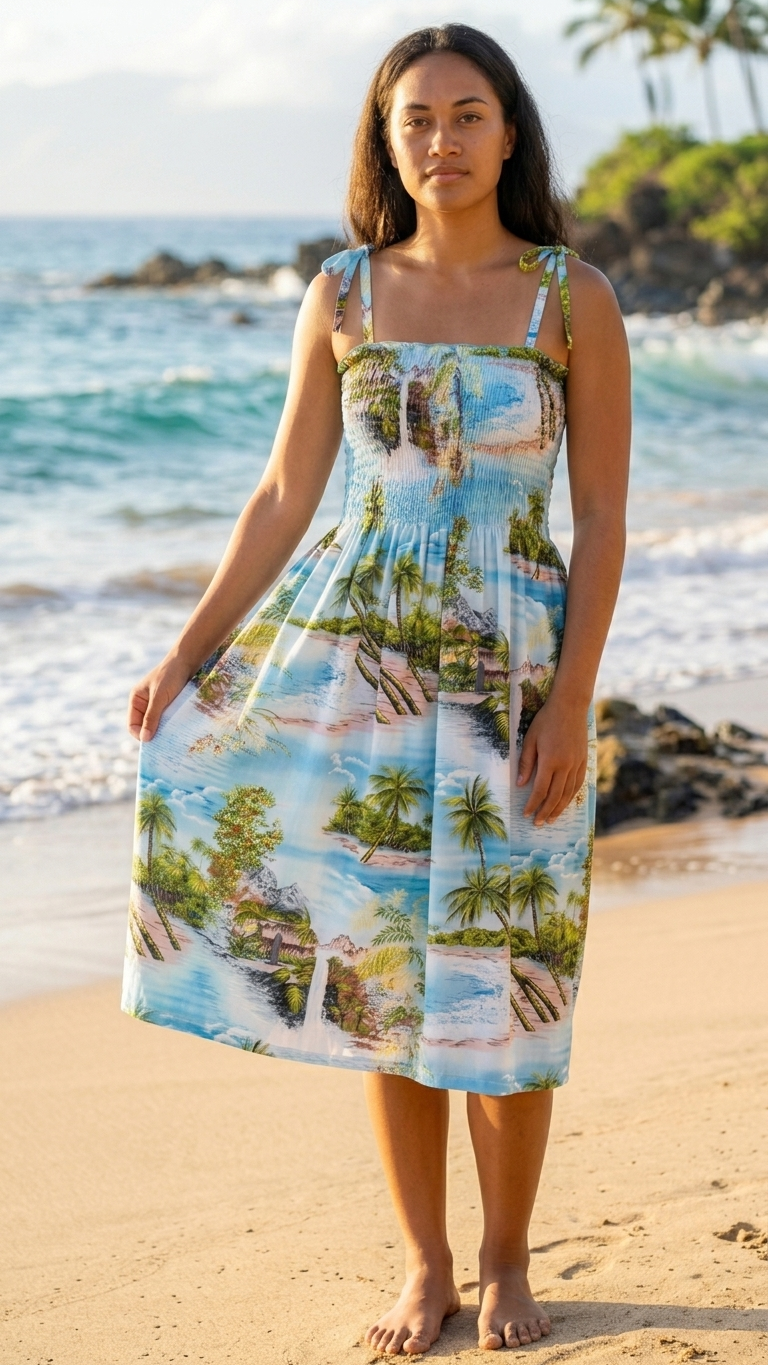
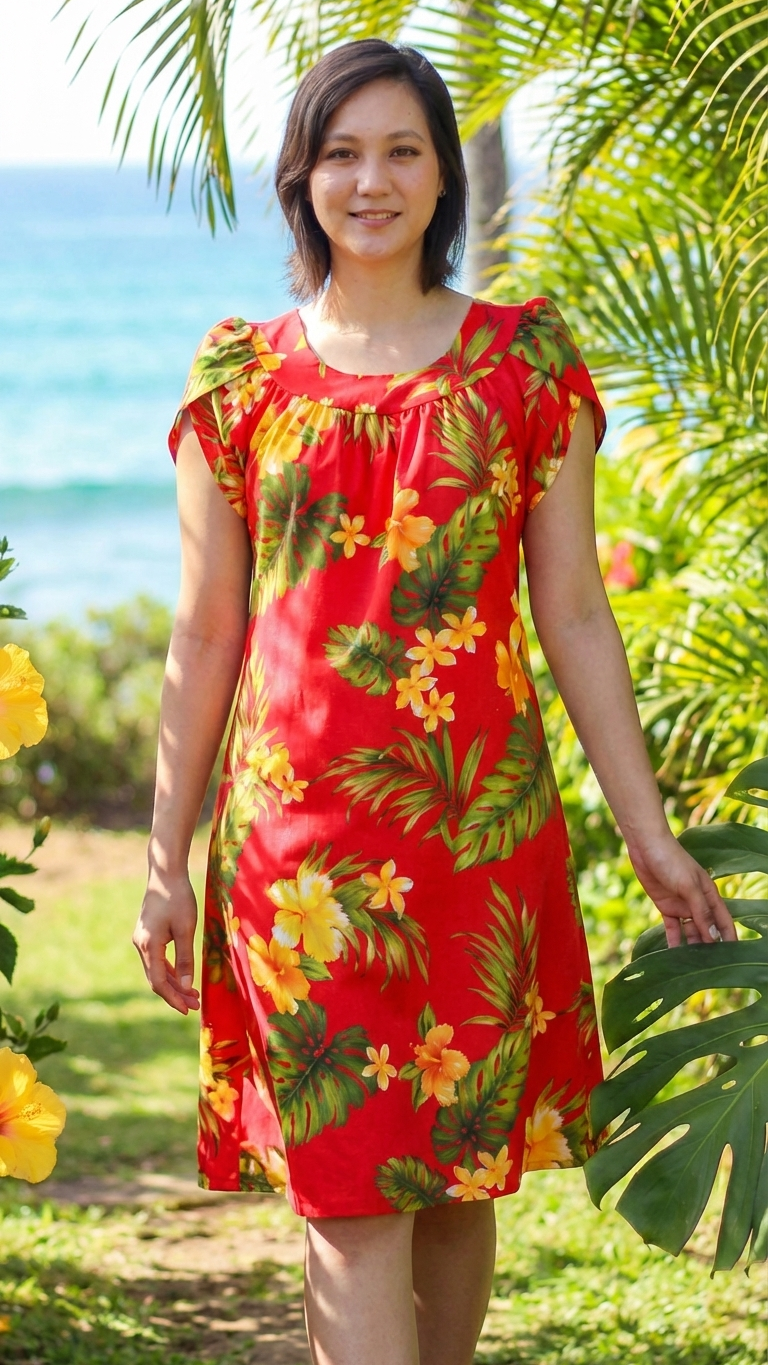
The muumuu — muʻumuʻu in Hawaiian — is the original and still the best for sustained comfort. Loose, shoulder-hung, no waist seam, no cling when you sit. Women who haven’t worn one sometimes assume it’s shapeless, but a well-cut muumuu in 100% rayon has a completely different drape than anything sold in airport gift shops.
For shorter options, tank dresses are the most practical choice for active days — snorkeling, waterfall hikes, botanical garden tours. They dry fast and move well.
Separates
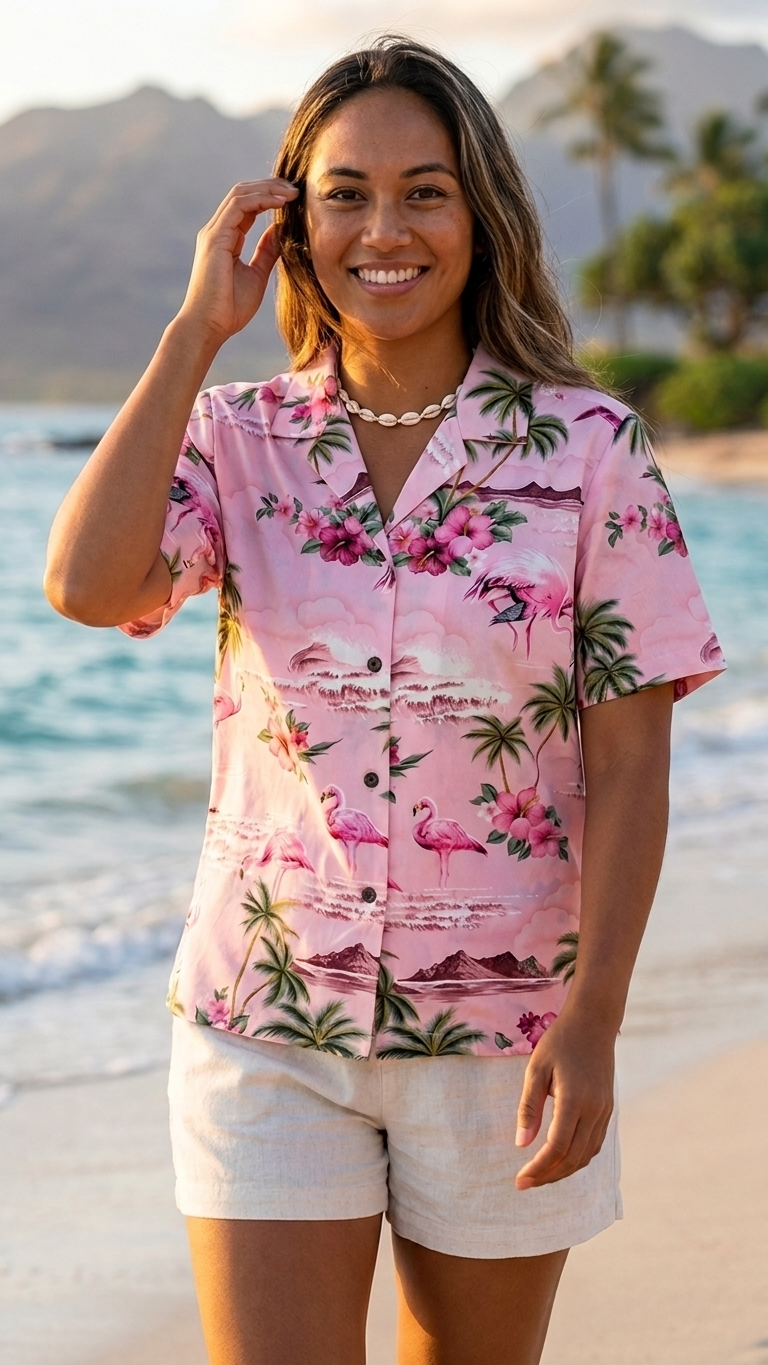
Linen or rayon shorts with a flowy top, or a women’s aloha shirt worn open over a swimsuit — both work fine. Women’s rayon shirts are a particularly underrated option: you get all the breathability of the best aloha fabric in a relaxed button-down silhouette that works for a hiking trail and a waterfront dinner equally well.
What Not to Pack
Heels are rarely practical anywhere outside a hotel ballroom. Tight synthetic fabrics make you miserable within an hour. A blazer or structured jacket stays in your bag the entire trip unless you’ve booked a formal event. One light cardigan or cotton wrap handles the genuinely cold situations — air-conditioned restaurants, evening sea breezes, morning boat rides — better than anything heavier.
Shop women’s Hawaiian clothing →
Browse Women’s Collection
Free shipping on every order · Ships from Maui
What Men Wear in Hawaii
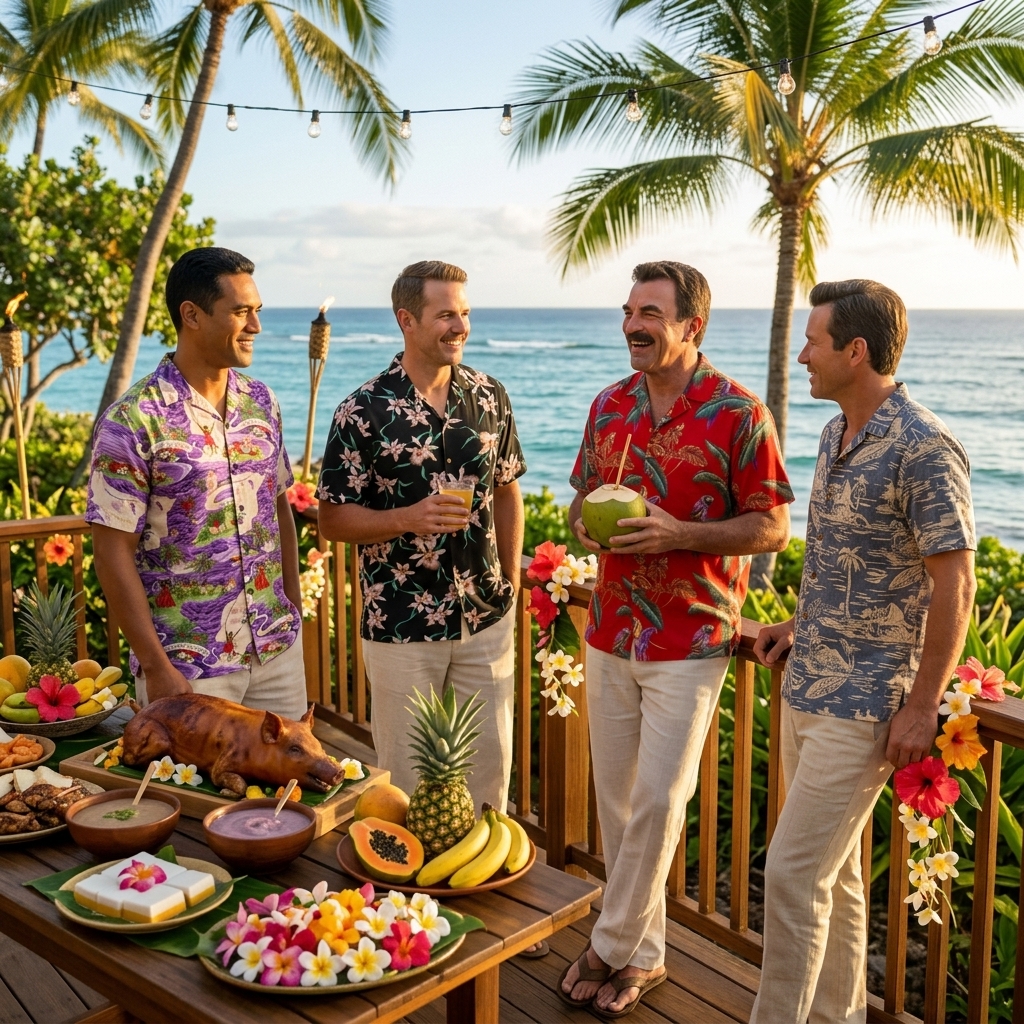
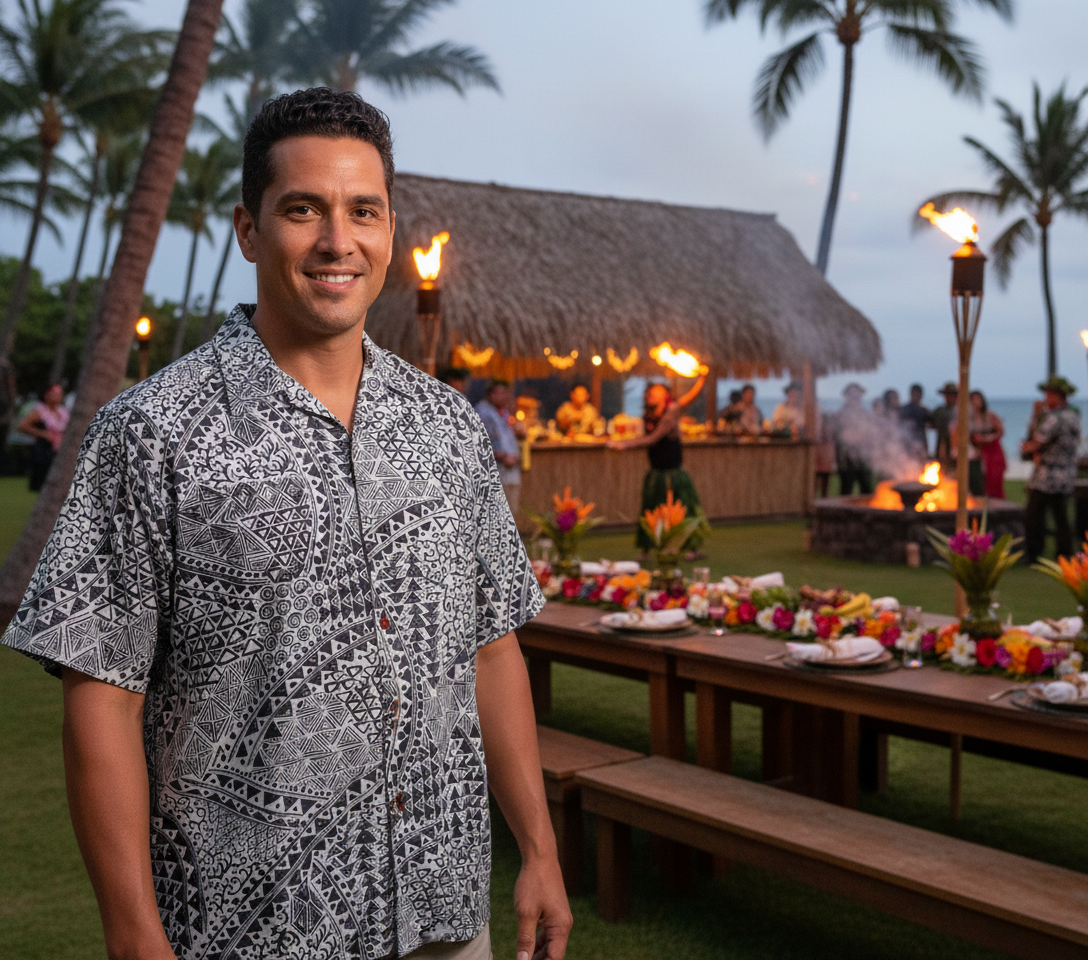
The aloha shirt is not a costume here. It’s state-recognized business attire — Hawaii’s legislature formally encouraged “Aloha Friday” in 1965 so that men could wear aloha shirts to work, and that practice never stopped. A collared aloha shirt reads as dressed up in most island settings, not casual.
The Aloha Shirt
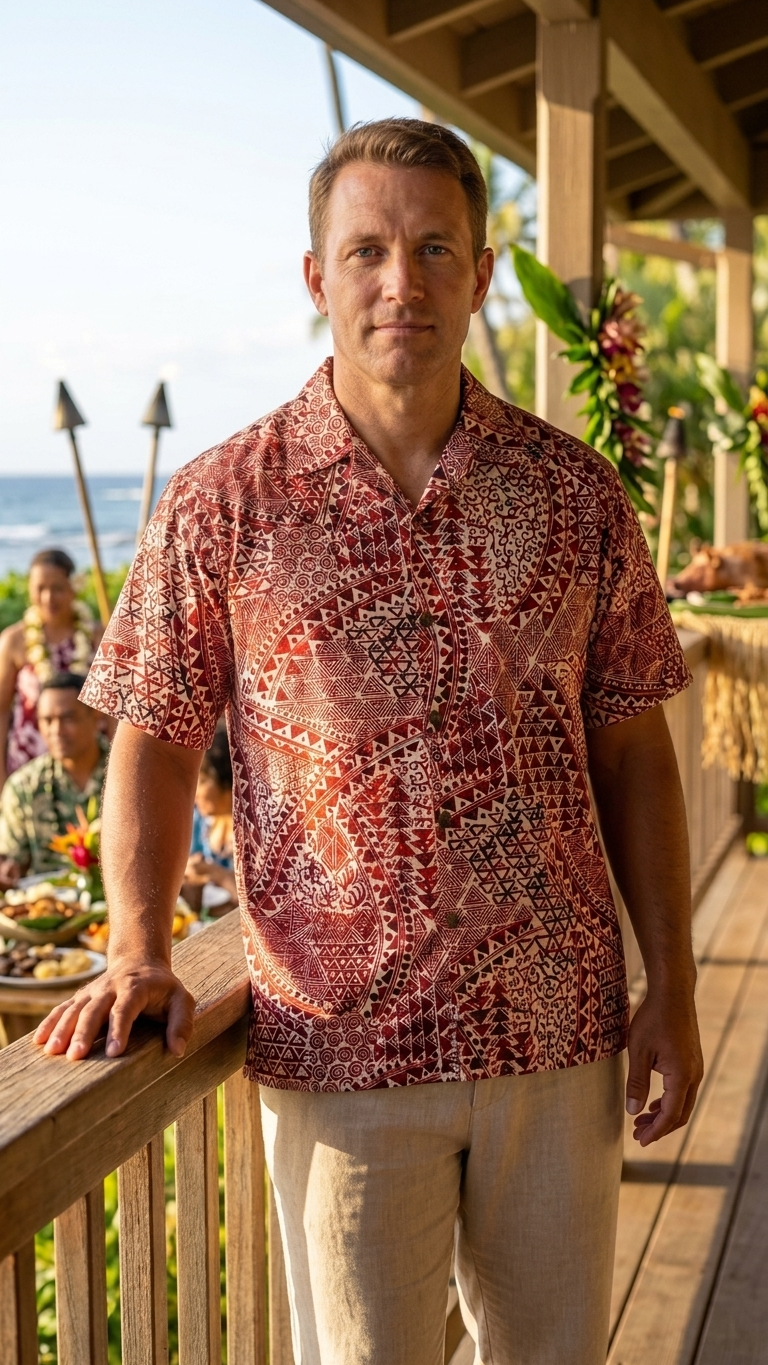
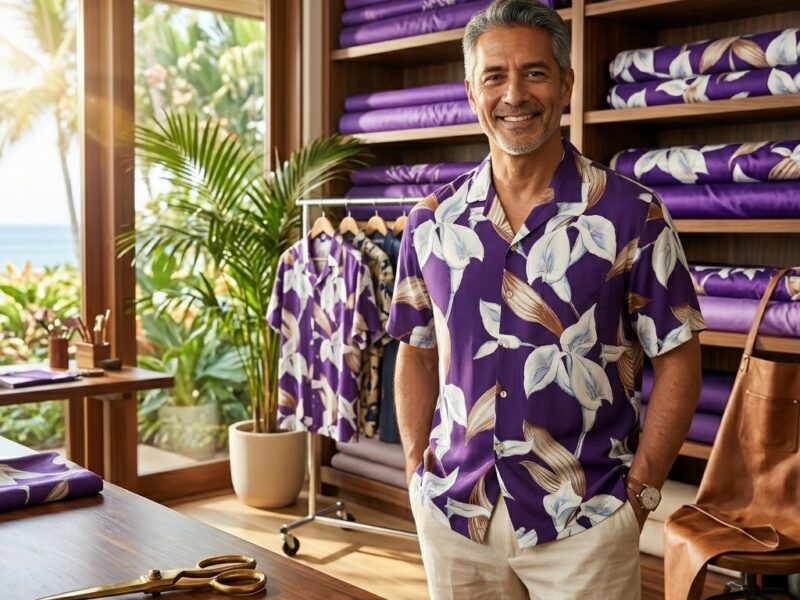
For most situations — dinner, sightseeing, a luau, a wedding, a business meeting — one good aloha shirt covers it. The difference between a good one and a bad one is fabric and construction. Cheap polyester aloha shirts have a shiny surface, thin plastic buttons, and prints that look digital even from a distance. A real men’s Hawaiian aloha shirt made in Hawaii has coconut shell buttons, a matte fabric surface, and prints that were actually designed in the islands.
Cotton aloha shirts are more durable and hold structure through repeated washing better than rayon. Rayon is cooler and drapes more elegantly. Men’s cotton shirts are a better pick for hiking, active days, and beach trips. Rayon works better for dinners and evenings out.
Shorts and Pants
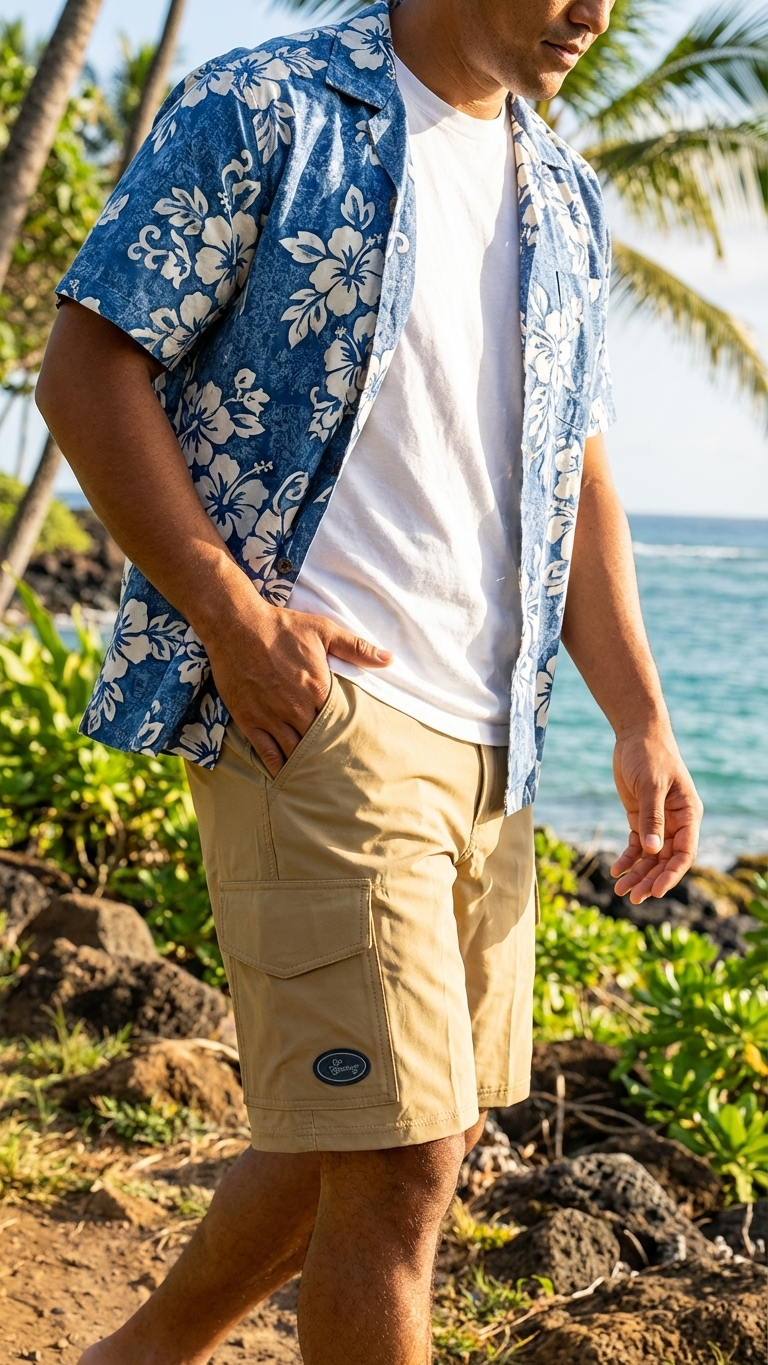
Board shorts or casual chino-style shorts for daytime. For evenings, linen pants or chino-weight shorts with a decent aloha shirt covers every restaurant on Maui, Oahu, Kauai, or the Big Island. Jeans work but are rarely comfortable, especially on the humid windward sides.
Footwear
Locals call flip-flops “slippers” — or “slippahs” — and they’re the default footwear for roughly 90% of daily life. The cultural norm in Hawaii is shoes off before entering a home, many vacation rentals, and some shops and cultural sites. Slip-ons make this effortless. For anything involving lava fields, mud, or significant elevation gain, add one pair of closed-toe shoes you don’t mind getting dirty.
Browse men’s Hawaiian shirts from Maui →
Shop Men’s Collection
Free shipping on every order · No minimum
Matching Family Hawaiian Outfits
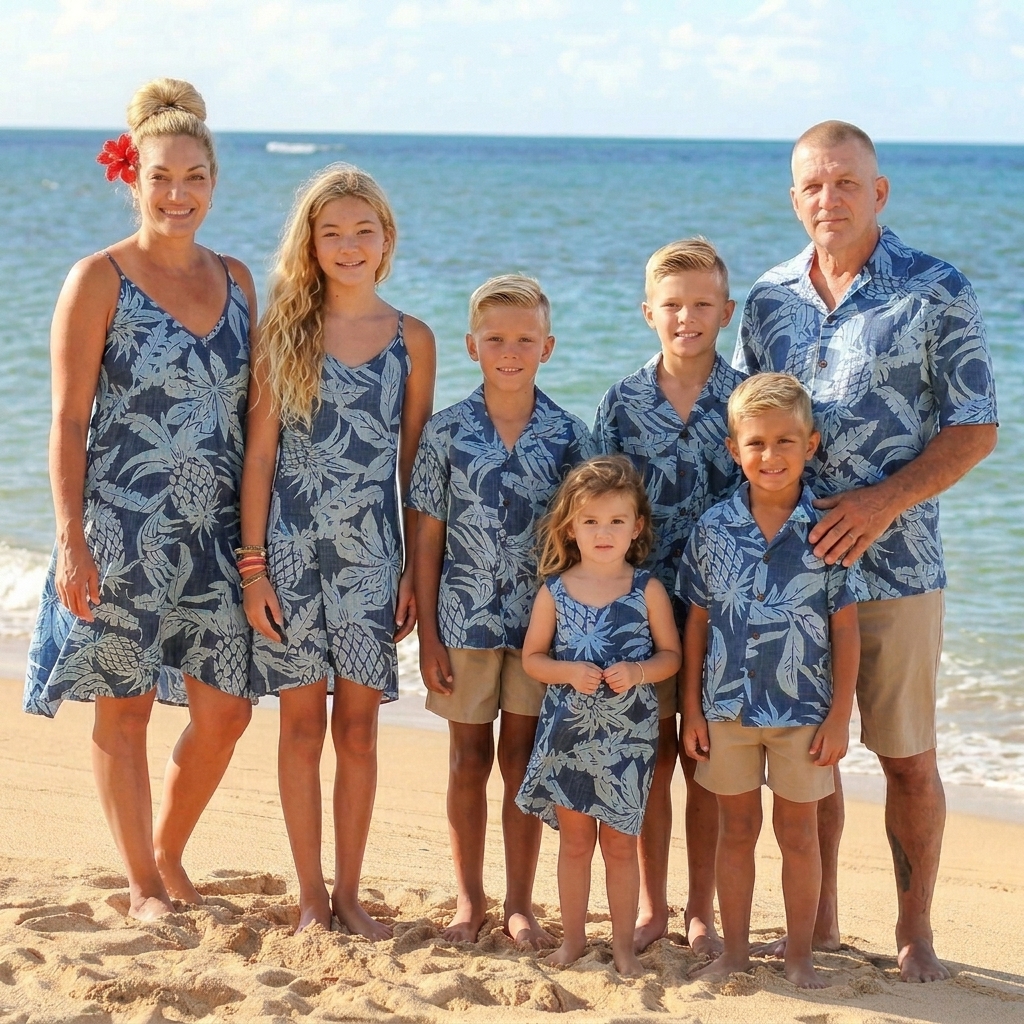
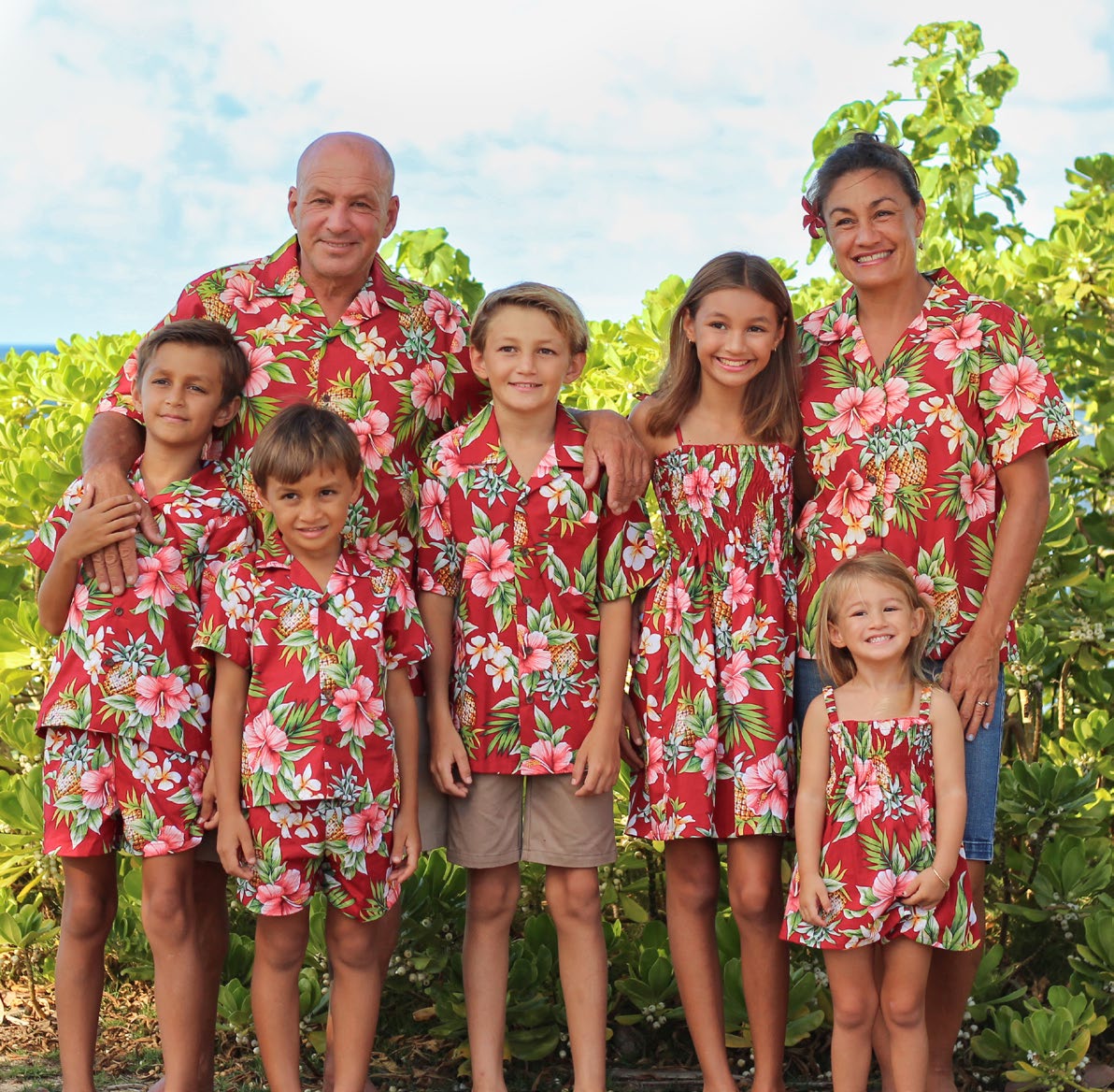
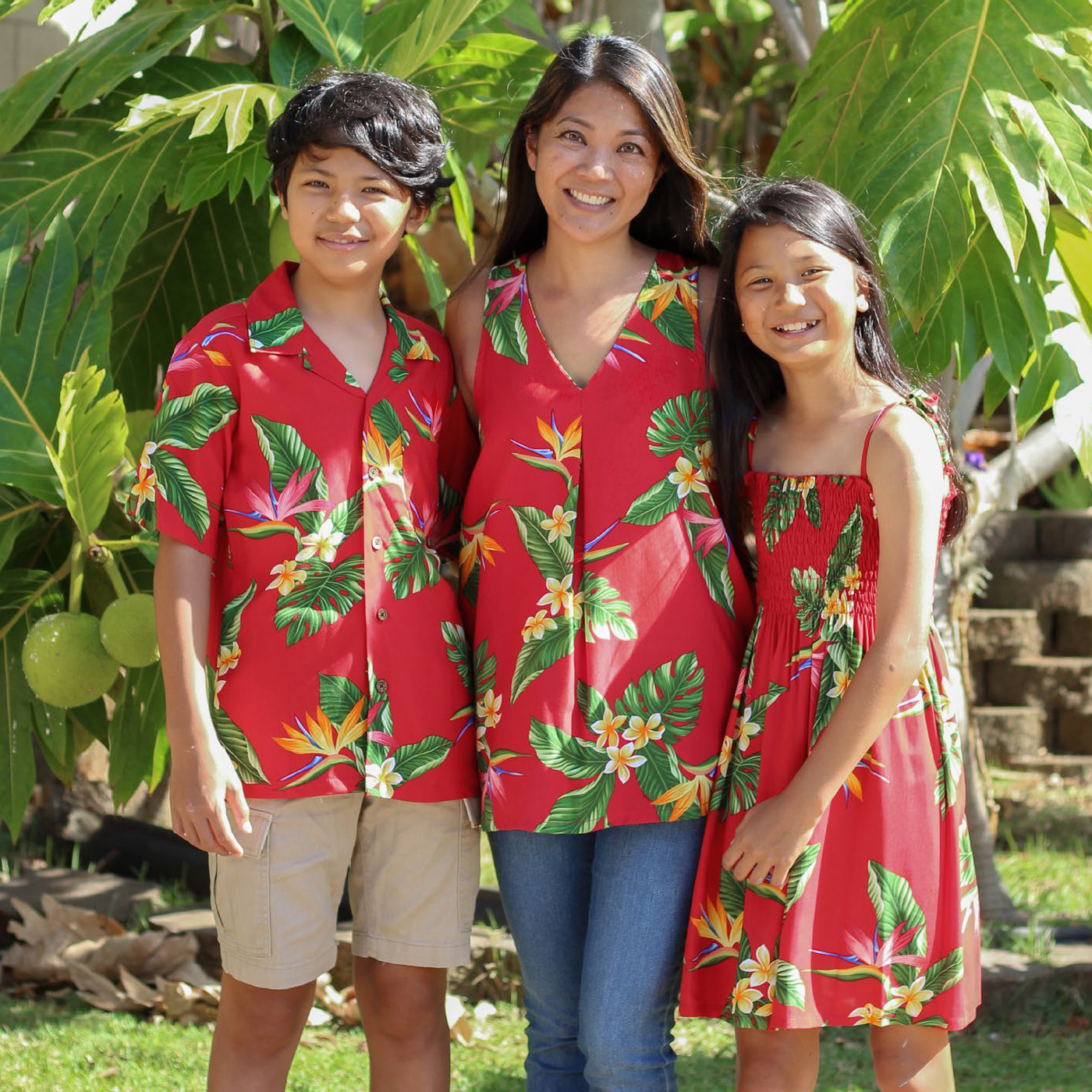
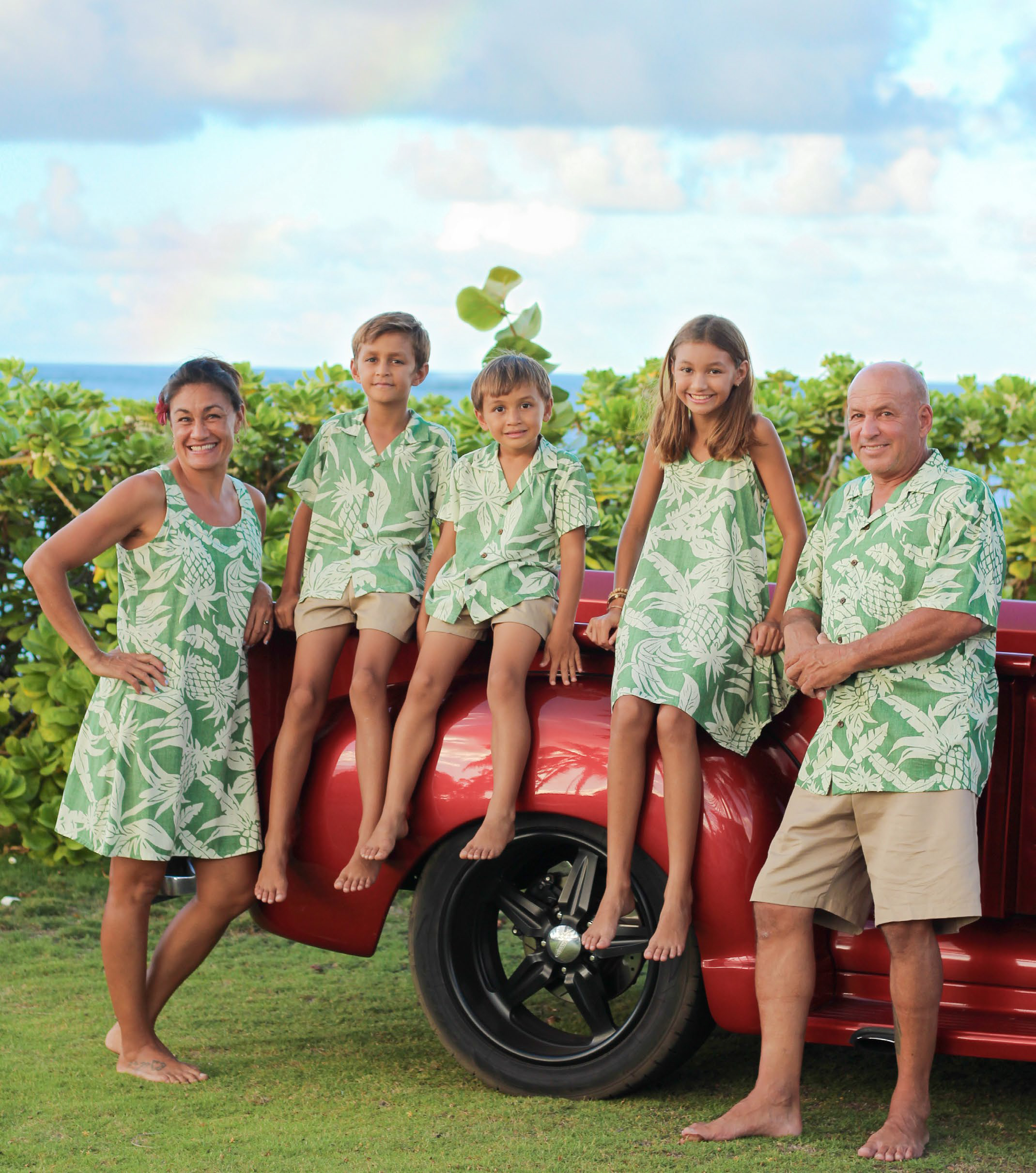
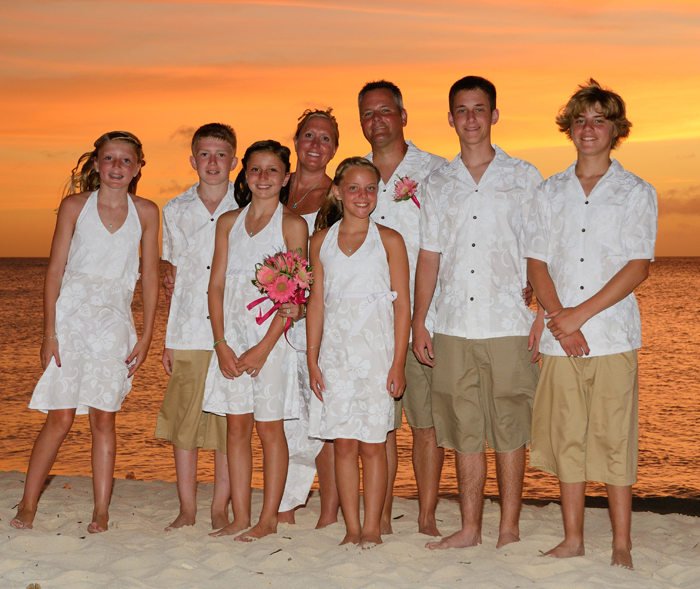
Coordinating Hawaiian prints for family photos has become genuinely popular, and for good reason — the islands make a beautiful backdrop, and a family in the same print across different garments photographs dramatically better than everyone in their own separate thing.
The trick is complementary, not identical. Mom in a Hawaiian dress, dad in a matching aloha shirt, kids in coordinating prints — the same color palette but different garments — looks intentional without being costume-like. Our matching family collection is designed for exactly this, with coordinating prints available across men’s, women’s, boys’, and girls’ styles.
If matching outfits are part of your trip, shop before you leave — the specific print and size combinations you need aren’t always available on the island in your timeframe.
Island-by-Island: What Changes Where
Most packing guides treat Hawaii as a single climate. It isn’t. Each island has its own personality, and what works well on one can feel slightly off on another.
Oahu
Waikiki is the most resort-casual environment in Hawaii. Honolulu has real business districts and the most formal dining options in the state. A nicer aloha shirt and decent shorts work for almost everything, but Oahu is the one island where you might get some use out of pressed slacks for a dinner reservation.
Maui
Maui skews slightly upscale on the resort side — the Wailea strip has the most expensive hotels in the state — but it’s still island casual everywhere. The one Maui-specific thing to know: the road to Hana runs through rainforest, and the North Shore near Paia gets real rain. And Haleakala, at 10,023 feet, requires a real warm layer for the summit regardless of what the beach temperature is doing. This isn’t negotiable.
Kauai
Kauai is the wettest, most laid-back, and least resort-feeling of the main islands. The North Shore around Hanalei is genuinely rural. You’ll want quick-dry fabrics and a rain jacket more on Kauai than anywhere else. Dress is the most relaxed here — even the nicest restaurants in Hanalei are fine with board shorts and a clean shirt.
Big Island
The Big Island has fourteen climate zones — you can be snorkeling in 82-degree water at Kona in the morning and standing in actual snow on Mauna Kea by afternoon. The summit, at 13,803 feet, is genuinely dangerous in wrong clothing. If Mauna Kea is on the itinerary, pack warm layers that would be appropriate for a cold autumn day in the mountains.
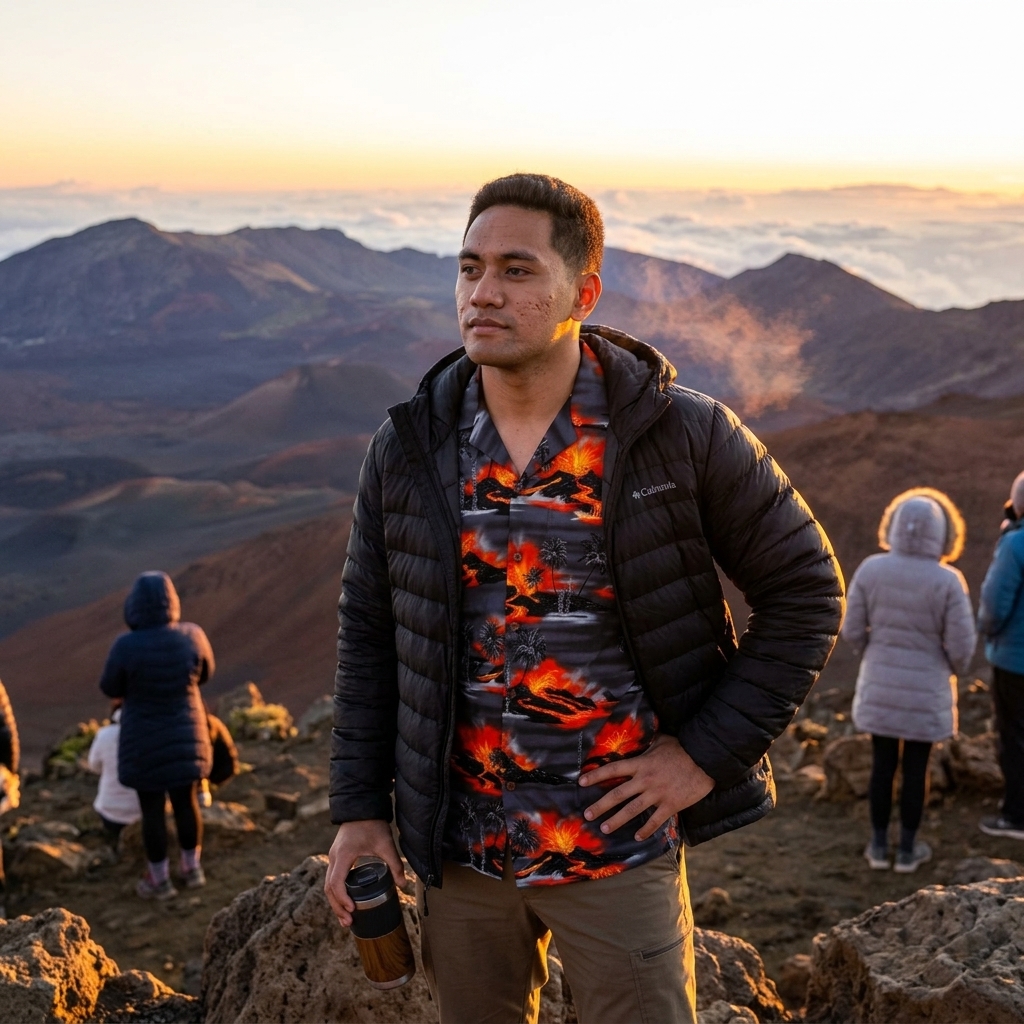
“One packable down jacket fixes
every cold-Hawaii situation.
It weighs almost nothing. Bring it.“
The Cold Hawaii Problem
Haleakala at sunrise is the experience people mention most when they talk about being underprepared. The summit sits just above 10,000 feet. At the 5 AM sunrise viewing, temperatures regularly sit in the mid-30s with wind pulling it colder. The parking lot looks like a disaster every morning: people wrapped in rental car floor mats, whatever they could find.
One packable down jacket or a mid-weight fleece plus one pair of long pants is the insurance policy for every cold-Hawaii situation. They weigh almost nothing in a bag. Bring them.
What to Wear for Specific Occasions
Beach Days
Swimsuit plus a cover-up, a sun hat, and UV-protective sunglasses. For the water, a UPF rash guard is worth packing for snorkeling. One practical note: Hawaii has banned sunscreens with oxybenzone and octinoxate statewide. Check your sunscreen before you pack, or plan to buy reef-safe sunscreen when you land.
Dinner Out
A collared aloha shirt and decent shorts for men. A sundress or a nice women’s aloha shirt with linen pants for women. That’s the outfit for every non-hotel-ballroom dinner in Hawaii, including the expensive ones.
A Luau
Lean into it. An aloha shirt or a Hawaiian dress is exactly right. You’ll be outdoors on grass or sand, often near the water, so bring a light layer for when the sun drops and skip the heels. If someone offers you a lei when you arrive, wear it.
Hiking
Quick-dry synthetic or linen hiking shorts, a moisture-wicking shirt, and closed-toe shoes with actual grip. For longer hikes like Kalalau Trail on Kauai or anything in Hawaii Volcanoes National Park, trekking poles and layers are genuinely useful. Leave the aloha shirt for after.
Sacred and Cultural Sites
Hawaii has heiau (ancient temples), active places of worship, and dozens of culturally significant sites. Cover up a bit more, stay on marked paths, and follow posted signs. The clothing is the easy part. The respect behind it is what matters, and it costs nothing.
The Made-in-Hawaii Difference
There’s authentic Hawaiian clothing and there’s Hawaiian-themed clothing, and the gap between them is significant. Most Hawaiian-print garments sold in the United States are manufactured overseas in polyester, with licensed prints that were never near an actual hibiscus. They’re fine as novelty items.
Clothing made in Hawaii — actually designed, printed, and sewn in the state — carries a different weight. The prints reference real places, real traditions, and real design heritage. When you wear something made in Hawaii in Hawaii, it reads differently than a costume does.
We’ve been making and selling authentic Hawaiian clothing from Maui since 1998. Every shirt, dress, and matching family set in our store is made to the standard that garment has to actually perform in Hawaii — because that’s where we live, and that’s who we’re making it for.
→ Shop all collections — men’s, women’s, matching family, and more. All made in Hawaii.
The Short Packing List
Everything you need for a week in Hawaii.
- Swimsuits (2) — so one can dry while you’re wearing the other
- Aloha shirts or Hawaiian dresses (3–4) — cotton or rayon, not polyester. Browse our collections →
- Shorts or linen pants (2–3) — light and quick-dry
- One nicer outfit — a good aloha shirt or a sundress that works for dinner
- UPF rash guard — for snorkeling and beach days
- Packable warm layer — a down jacket or fleece; mandatory if you’re hitting any summit
- Light rain shell — doubles as your wind layer on boats and helicopter rides
- Wide-brim hat and polarized sunglasses
- Reef-safe mineral sunscreen — required by law in Hawaii
- Slippers/sandals for daily life; one pair of closed-toe shoes for trails
If matching outfits for a family trip are part of the plan, browse our matching family collection — coordinating prints across men’s, women’s, boys’, and girls’ styles.
Mahalo for reading. We’ve been doing this from Maui since 1998.
Free shipping on every order · Ships from Wailuku, Maui