Shipped from Wailuku, Maui
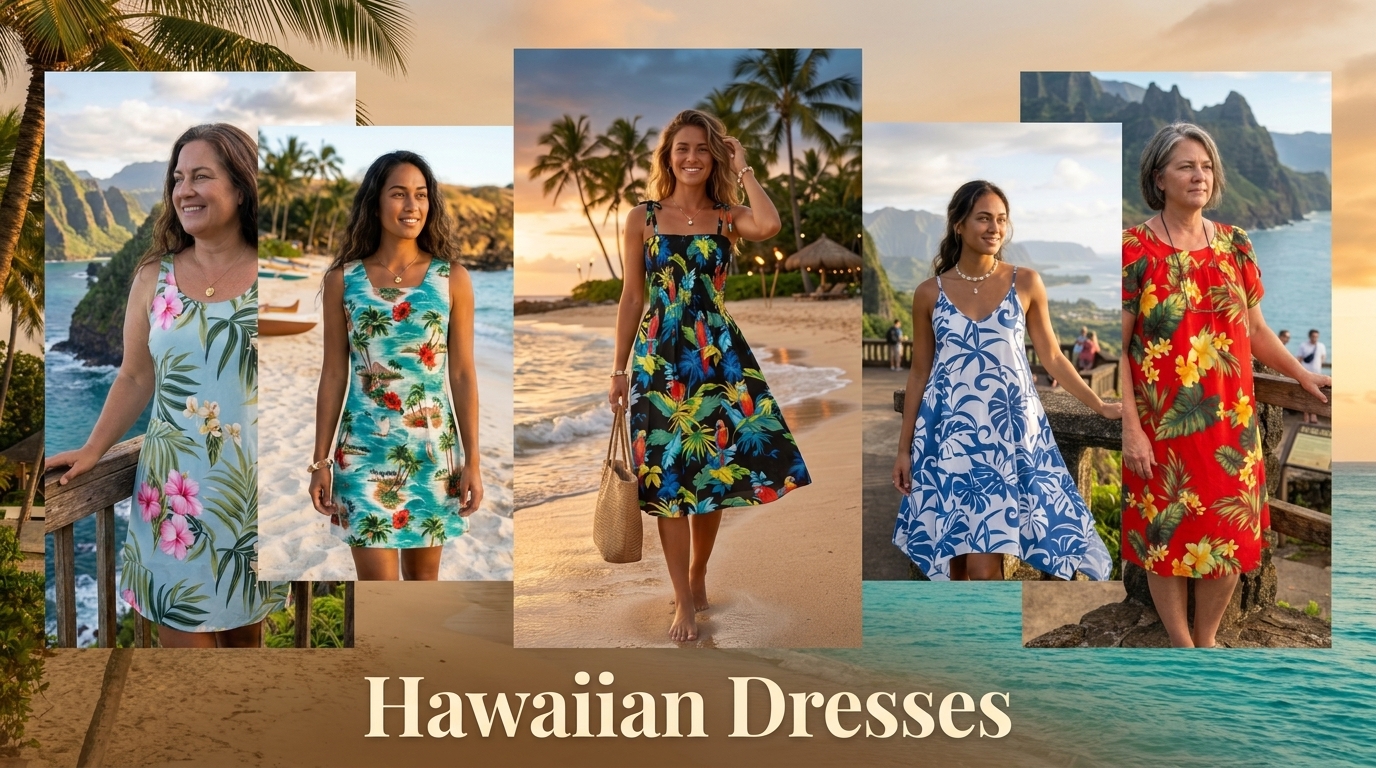
Muumuu, sundress, or empire maxi — what each style is actually for, and how to pick one without guessing.
What Actually Counts as a Hawaiian Dress?
Here’s where most buyers get stuck: they search “Hawaiian dress,” see three hundred floral options, and pick based on which flower looks nicest. Wrong order of operations. Figure out where you’re wearing it first. A rayon empire maxi that photographs beautifully at a sunset wedding will feel like a bedsheet at a beach bonfire. A short cotton tank dress that’s perfect for a Kaanapali beach day will look underdressed at a luau with a dress code.
We’ve sold R.J. Clancey, Two Palms, and Paradise Found dresses out of Wailuku for years now, and the return requests almost always trace back to the same mistake — someone bought the print they liked instead of the cut they needed. So let’s fix that first.
The Four Real Styles
The Muumuu — For Church, Luaus, and Evenings

The muumuu is the original. Loose through the body, modest neckline, usually ankle-length, sometimes with a scarf hem or empire seam to keep it from looking like a tent. It’s still what’s worn to church, to the Merrie Monarch hula competitions, and to family gatherings across the islands — not a costume, an actual daily garment for a lot of Hawaiian women. If you want the dress that reads as “I understand the culture I’m dressing for,” this is it.
Our Pale Hibiscus Orchid Evening Dress$70.99 from RJC is the one we point people toward for a luau with an actual dress code, or a Hawaiian wedding where you’re not sure how formal to go. It runs true to size and comes in sizes up to 3X.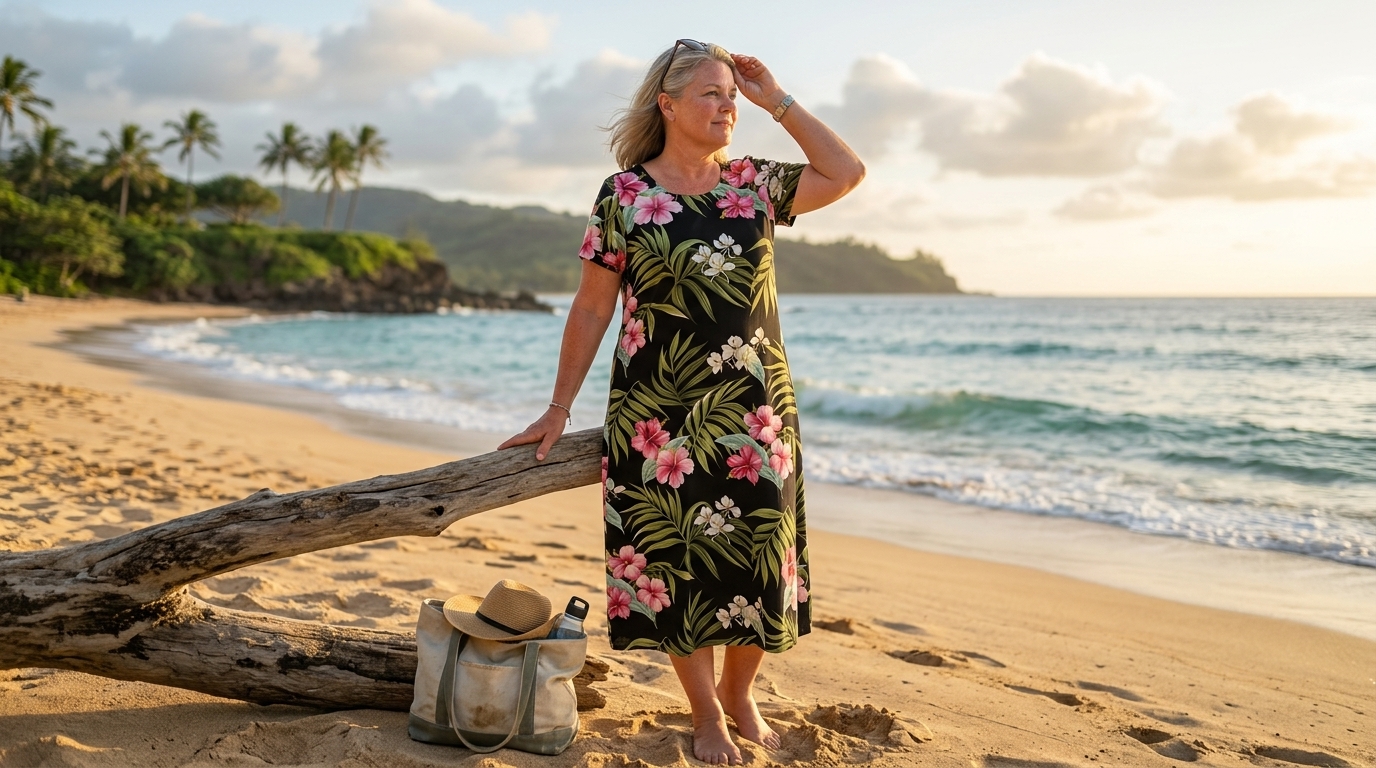
The Smocked Tube Dress / Sundress — Casual, Beach, Everyday
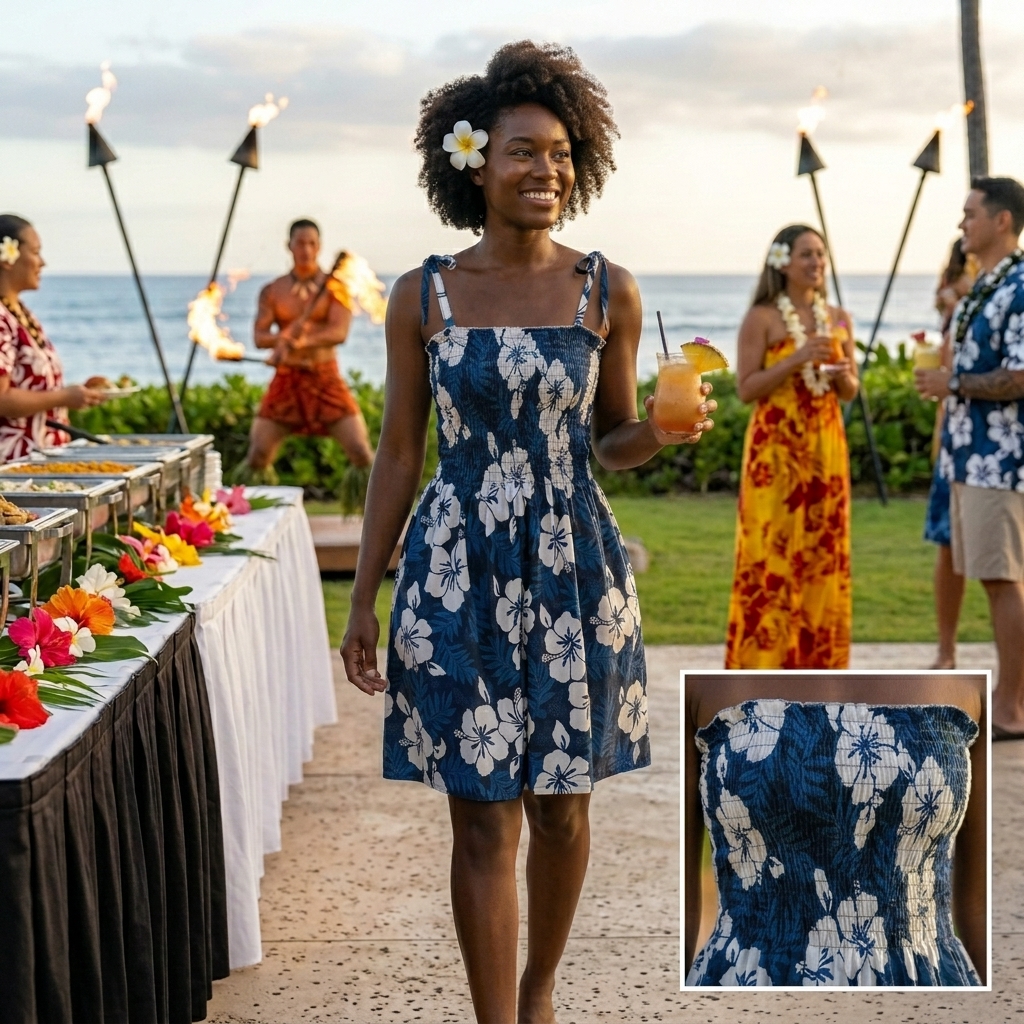 Elastic smocked bodice, no zipper, sits above or at the knee. This is the workhorse of the category — the one you throw on for a beach lunch, a resort dinner, or a photo you didn’t plan for. Cotton versions breathe better in humidity; they’re also the ones that hold their print color longest after repeated washing.
The White Hibiscus Fern Smocked Tube Dress$53.99 is our best-seller in this cut — crisp white background, 100% cotton, made in Hawaii. If you want more coverage on the shoulder, the Hala Pineapples Scarf Hem Dress$59.99 adds a tie strap and a scarf hem that moves better on the dance floor.
The Empire-Waist Flare Maxi — Weddings, Date Nights, Photos
This is the dress for when you actually want to look dressed up. Empire seam under the bust, flare through the skirt, almost always cut in rayon because rayon has the drape and movement a cotton dress can’t fake. It photographs well in wind — which matters more in Hawaii than almost anywhere else.
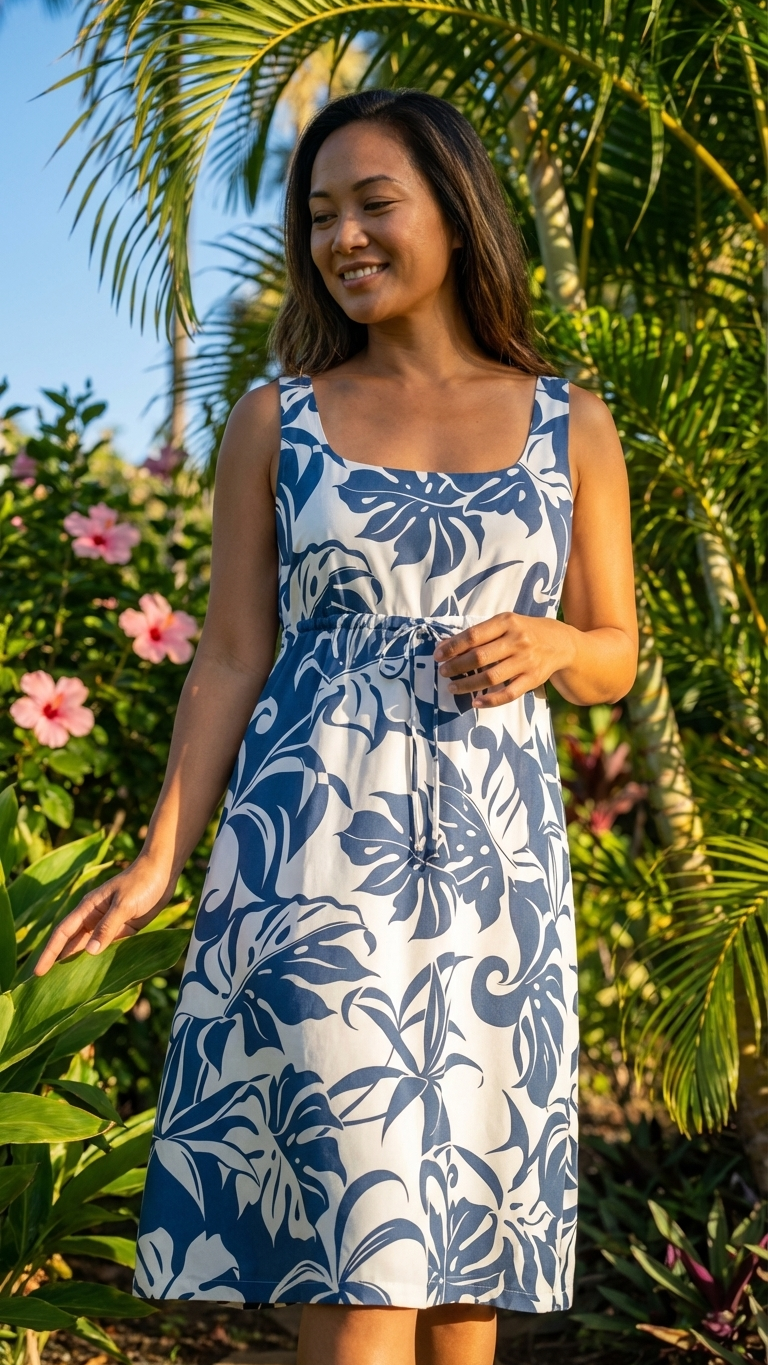
The Two Palms Hawaiian Orchid Empire Princess Flare Dress$84.99 is 100% rayon, made in Hawaii, and it’s the one we sell most for beach weddings where the bride wants her guests coordinated but not matching.
The Short Tank Dress — Grab-and-Go
Shortest hem, simplest construction, sleeveless. Built for one thing: comfort in heat. Not the dress for a formal luau, but exactly right for a farmers market morning, a boat day, or packing light for a trip where you don’t want to think about outfits.
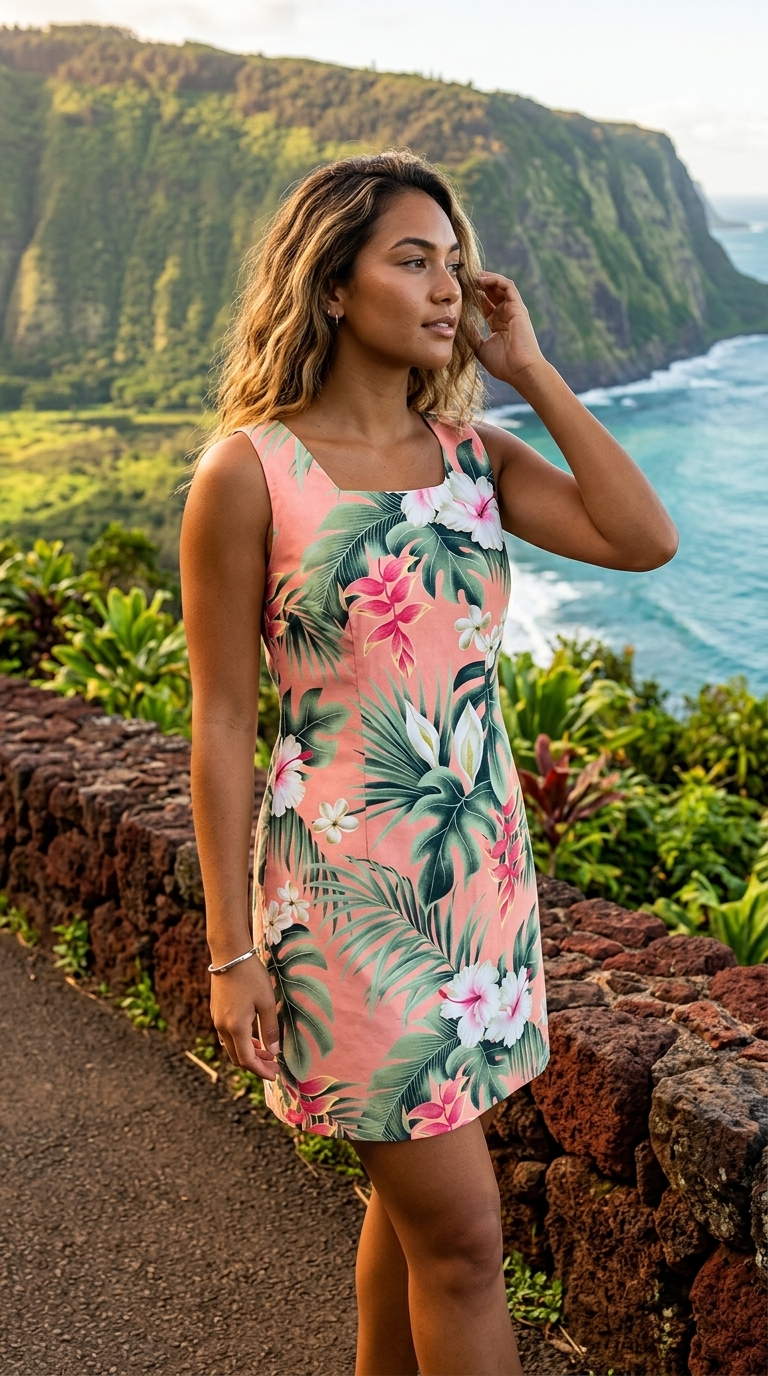
The Rose Mallow Hibiscus Scarf Hem Dress$59.99 is the one we’d pack first — it’s the RJC short tank cut, and it’s held up well as a store favorite for years.
How to Choose by Occasion
What should I wear to a luau?
A muumuu or a scarf-hem tube dress. Luaus run informal-to-semiformal depending on whether it’s a hotel luau or a family one — either style covers both. Skip the short tank dress here; it reads too casual once there’s a program and a head table.
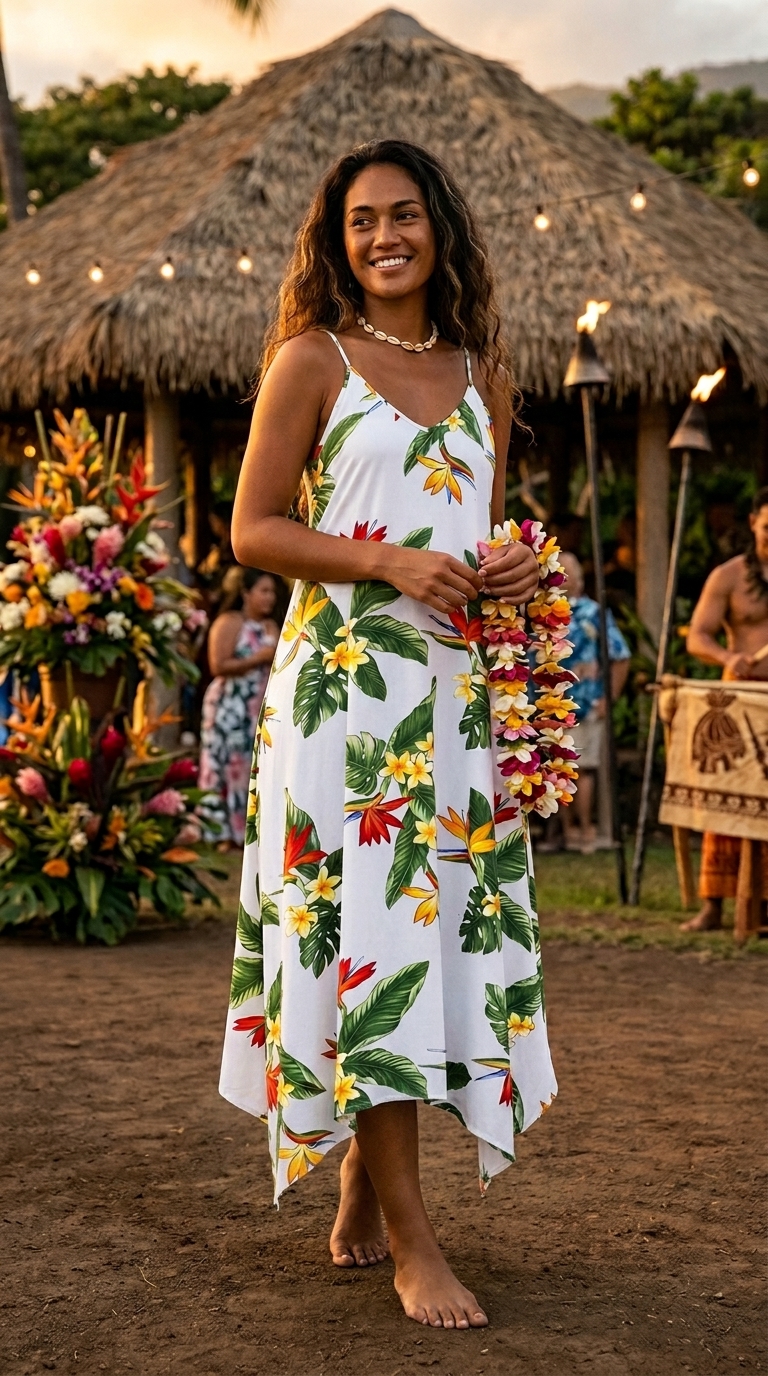
What’s a good Hawaiian wedding guest outfit?
An empire-waist flare maxi in rayon. It’s the dressiest of the four styles without tipping into formal-wear-that-doesn’t-belong-on-a-beach. Stick to prints with a single dominant color family so you’re not competing with the wedding party’s coordination.
What should I wear for an everyday Hawaii vacation?
Short tank dress or smocked cotton sundress. You’ll be in and out of these more than any other piece you pack — over a swimsuit at breakfast, into town for lunch, back to the room to change for dinner. Cotton holds up better to that kind of rotation than rayon does.
Rayon vs. Cotton — It Matters More Than the Print
Rayon drapes. It’s the fabric that gives the empire maxi its movement, and it photographs beautifully in wind and low light — which is most of a Hawaii evening. It also wrinkles if you pack it wrong and needs a gentler wash. Cotton holds its shape, breathes better in daytime heat, and takes machine washing without complaint. Neither is “better” — they’re built for different parts of the trip.
Rayon drapes. Cotton holds its shape.
Buy rayon for the photos, cotton for everything else.
Sizing Notes From the Floor
RJC dresses run true to size — if you’re between sizes, size up, since the smocked bodices are more forgiving than the scarf-hem waistlines. Two Palms empire-waist styles are cut generously through the bust and taper at the empire seam, so they work well for a wider range of body shapes than the tube dresses do. If a dress is going in a suitcase, buy the size you’d wear at home, not the size you’re hoping to be by the trip — humidity and travel bloat are real, and a dress that’s tight on day one only gets less comfortable.
Frequently Asked Questions
Is a muumuu the same as a Hawaiian dress?
No. A muumuu is one specific style of Hawaiian dress — loose-fitting, modest, usually ankle-length. “Hawaiian dress” is the broader category that also includes sundresses, empire maxis, and short tank dresses in tropical prints.
What do Hawaiians actually call these dresses?
Muumuu (moo-oo-moo-oo) for the traditional loose style. Outside that specific cut, most people in Hawaii just say “dress” or refer to it by the print or brand — “Hawaiian dress” is mostly a mainland search term, not local vocabulary.
Are Hawaiian dresses only for tourists?
No — muumuus in particular are everyday and formal wear for many women in Hawaii, worn to church, work, and family events. The tourist-shop versions get a bad reputation because of thin fabric and screen-printed (not woven) patterns, not because the style itself is inauthentic.